
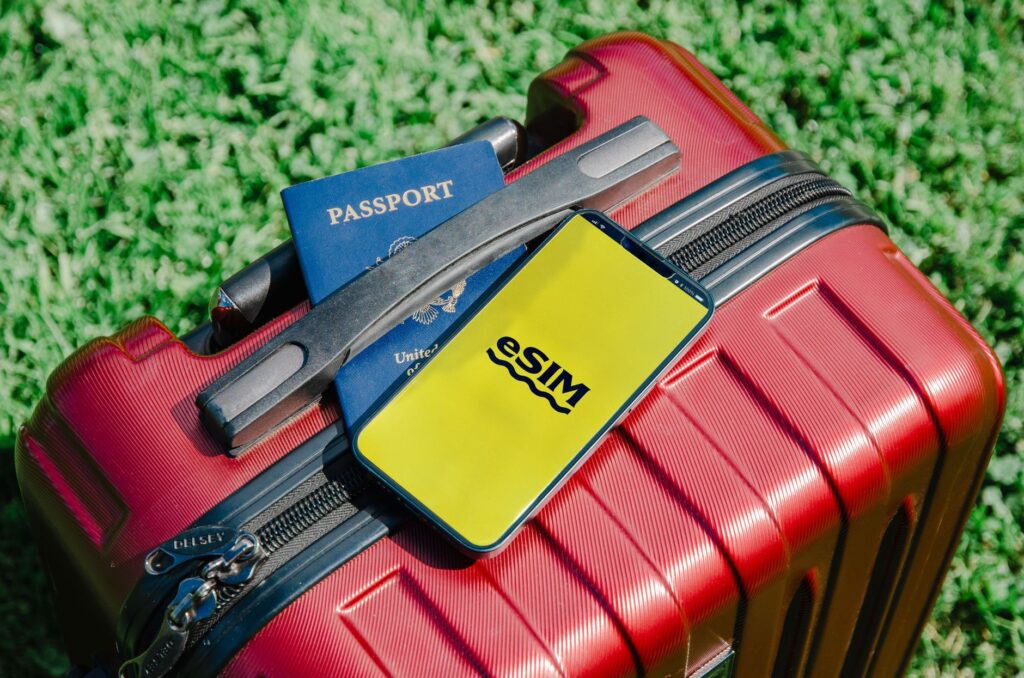
Vietnam is a slender ribbon of a country — Hanoi’s old quarter, Ha Long Bay’s karsts, Hoi An’s lanterns and buzzing Saigon. A travel eSIM connects you before you land at Hanoi (HAN) or Ho Chi Minh City (SGN): buy online, scan a QR code from your email, done. New to eSIMs? Start with what an eSIM is and how it works.
Why an eSIM beats roaming in Vietnam
Roaming from home can mean punishing daily fees or per-megabyte billing. A local-network eSIM is one fixed price for a data bundle, paid up front — nothing to settle later. See eSIM vs roaming: what international data really costs.
Mobile networks & coverage in Vietnam
Vietnam is served by Viettel, Vinaphone and Mobifone. Turnaa plans connect through partners and lock onto the strongest available signal automatically; the operator is shown in each plan’s details drawer. Coverage is strong in cities and along the coast, easing in the far northern mountains.
Best Vietnam eSIM plans right now
Prices are live and shown up front — pick your data size (our how-much-data guide helps).
| Data | Data type | Duration | Price |
|---|---|---|---|
| 0.1 GB | Standard | 7 days | $3.29 |
| 0.5 GB | Standard | 7 days | $3.90 |
| 0.5 GB/day | Unlimited | 1 day | $4.09 |
| 1 GB/day | Unlimited | 1 day | $5.19 |
| 1 GB | Standard | 7 days | $5.38 |
How to install and activate
- Buy your plan — the QR code arrives by email within seconds.
- On Wi-Fi, open Settings → Cellular → Add eSIM and scan it. Guides for iPhone and Android, plus a quick check of which devices support eSIM.
- On landing, select the eSIM for data and enable data roaming for that line. Your home number stays live — keep your number and WhatsApp.
Where to go — and staying connected across Vietnam
- Hanoi — the Old Quarter, street food and a base for Ha Long Bay.
- Ha Long Bay — an overnight cruise among limestone islands.
- Hoi An — a lantern-lit old town and tailor shops.
- Ho Chi Minh City & Sapa — southern energy and northern rice-terrace treks.
Continuing across the region? See one eSIM for Asian travel.
What to eat in Vietnam
Vietnamese food is fresh and fragrant. Slurp a bowl of pho, bite into a banh mi, roll fresh spring rolls, try Hanoi’s bun cha, and finish with a famous egg coffee.
Local customs, rules & sensitivities
- Cross the road slowly and steadily — the traffic flows around you; don’t bolt.
- Remove shoes in homes and temples, and dress modestly at religious sites.
- Use two hands to give and receive; a smile smooths everything.
- Bargaining is normal in markets; tipping is a growing but optional courtesy.
- Keep small notes for street food and grabs.
Vietnam data tips from the road
- Grab (ride-hailing and food) runs on data and is the easy way around.
- Download offline maps for Sapa and Ha Long day-trips.
- Airport SIM counters charge tourist rates; an eSIM skips them.
FAQ
How much data do I need for a Vietnam trip?
Maps, ride-hailing and social sit around 5–8 GB for a two-week trip. See our data guide.
Does it work in Ha Long Bay and Sapa?
Mostly yes near the towns and cruise routes; remote mountain trails can drop out, so download maps first.
Do I keep my regular phone number?
Yes — the eSIM is a data-only line; your home SIM stays active for calls and texts, bank codes included.
What if it doesn’t work when I land?
Usually two settings: select the eSIM for data and enable data roaming (see troubleshooting). Support replies fast, and unactivated plans are refundable within 24 hours.