
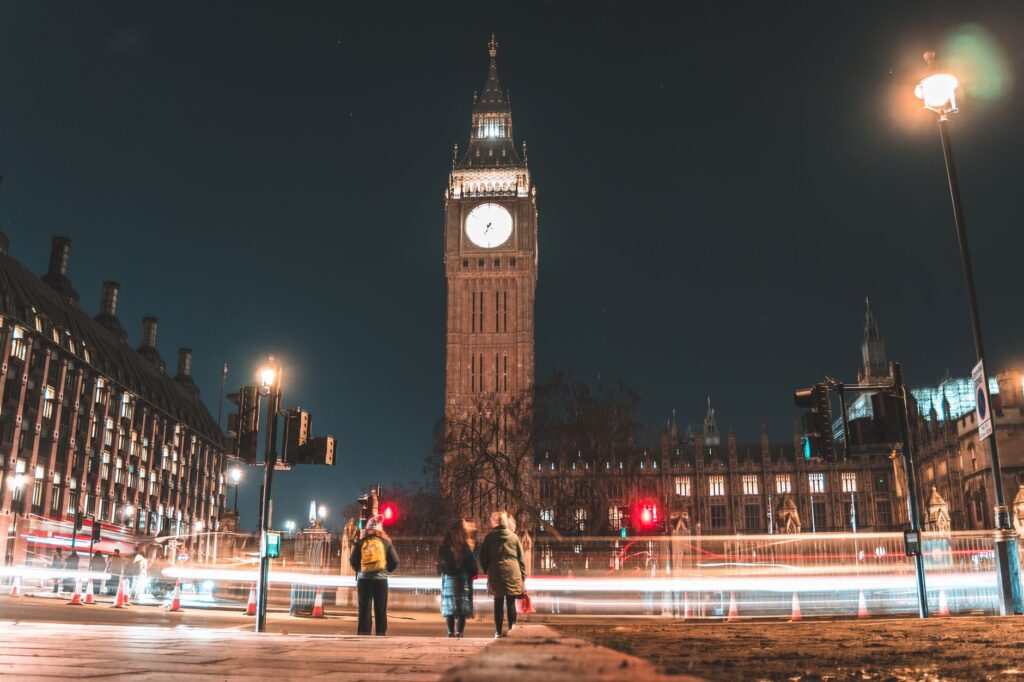
From London’s buzz to the silence of the Scottish Highlands, a Cotswolds village pub to a Cornish surf beach, the United Kingdom packs enormous variety into a small island. Trains, tubes and country lanes all run smoother with data in your pocket — for live departure boards, contactless travel and maps down tangled medieval streets. A travel eSIM gets you connected before you land at Heathrow or Gatwick: buy online, scan a QR code from your email, done. New to eSIMs? Start with what an eSIM is and how it works.
Why an eSIM beats roaming in the UK
Roaming from outside Europe often means steep daily passes or per-megabyte billing. A local-network eSIM is one fixed price for a bundle of data, paid up front — nothing to settle later. The maths is in eSIM vs roaming: what international data really costs.
Mobile networks & coverage in the UK
The UK runs on four networks — EE, Vodafone, O2 and Three. Turnaa plans connect through partners and pick the strongest available signal automatically; the operator is listed in each plan’s details drawer. Coverage is strong across England and the cities; the Scottish Highlands, rural Wales and remote islands have the usual mobile dead spots.
Best United Kingdom eSIM plans right now
Prices are live and shown up front — pick the data size for your trip (see our how-much-data guide).
| Veri | Veri türü | Süre | Fiyat |
|---|---|---|---|
| 0.1 GB | Standart | 7 gün | $3.29 |
| 0.5 GB | Standart | 7 gün | $3.33 |
| 0.5 GB/day | Sınırsız | 1 gün | $3.37 |
| 1 GB/day | Sınırsız | 1 gün | $4.20 |
| 1 GB | Standart | 7 gün | $4.32 |
How to install and activate
- Buy your plan — the QR code arrives by email within seconds.
- On Wi-Fi, open Settings → Cellular → Add eSIM and scan it. Guides for iPhone and Android, plus a quick check of which devices support eSIM.
- On landing, select the eSIM for data and switch on data roaming for that line. Your home number stays live — keep your number and WhatsApp.
Where to go — and staying connected across the UK
- London — Westminster, the museums, markets and the West End; the Tube now has mobile signal on many lines and platforms for live planning.
- Scotland — Edinburgh’s Old Town, the Highlands, Loch Ness and the Isle of Skye, where map data and weather checks matter on single-track roads.
- The classic countryside — the Cotswolds, the Lake District and Snowdonia in Wales for walking and driving.
- The South West — Bath, Stonehenge and Cornwall’s beaches and coast path.
Hopping to the Continent afterwards? See one eSIM for European travel for a wider trip.
What to eat in the UK
British food is better than its reputation. Have proper fish and chips by the sea, a full English breakfast, a Sunday roast in a country pub, and afternoon tea with scones, clotted cream and jam. Don’t miss the nation’s adopted favourite — a curry, with chicken tikka masala practically a native dish — plus savoury pies, and regional specials like haggis in Scotland and a Welsh cake. The pub is the heart of it all: order and pay at the bar, and buy your “round” when it’s your turn.
Local customs, rules & sensitivities
- Queue. Britons queue for everything and jumping one is a genuine social crime — wait your turn patiently.
- Driving is on the left, and pedestrians should look right first when crossing.
- Politeness runs deep — “please”, “thank you” and “sorry” are used constantly; on escalators, stand on the right and let people pass on the left.
- Pub etiquette — many pubs have no table service; order at the bar. Tipping in pubs isn’t expected, though 10–12.5% in sit-down restaurants is (often added as a “service charge”).
- Contactless everywhere — tap to pay works on buses, the Tube and almost all shops; cash is rarely needed.
UK data tips from the road
- Download offline maps for the Highlands and rural Wales, where signal drops between villages.
- Airport SIM kiosks charge tourist rates — an eSIM skips that entirely.
- Use live transport apps (Citymapper, National Rail, TfL Go) — they need data but save hours.
FAQ
How much data do I need for a UK trip?
For maps, messaging, social and transport apps, 3–5 GB a week suits most travellers; streaming and hotspotting push it higher. Our data guide has the numbers.
Does it work on the London Underground?
Increasingly yes — many Tube lines and stations now have mobile signal, and where they don’t, offline maps and downloaded tickets keep you moving.
Will it work in the Scottish Highlands?
Along main roads and towns, yes; on remote single-track routes and islands expect occasional dead spots on any network, so download maps first.
Do I keep my regular phone number?
Yes — the eSIM is a data-only line; your home SIM stays active for calls and texts, bank codes included.
What if it doesn’t work when I land?
Usually two settings: select the eSIM for data and enable data roaming (see troubleshooting). Support replies fast, and unactivated plans are refundable within 24 hours.