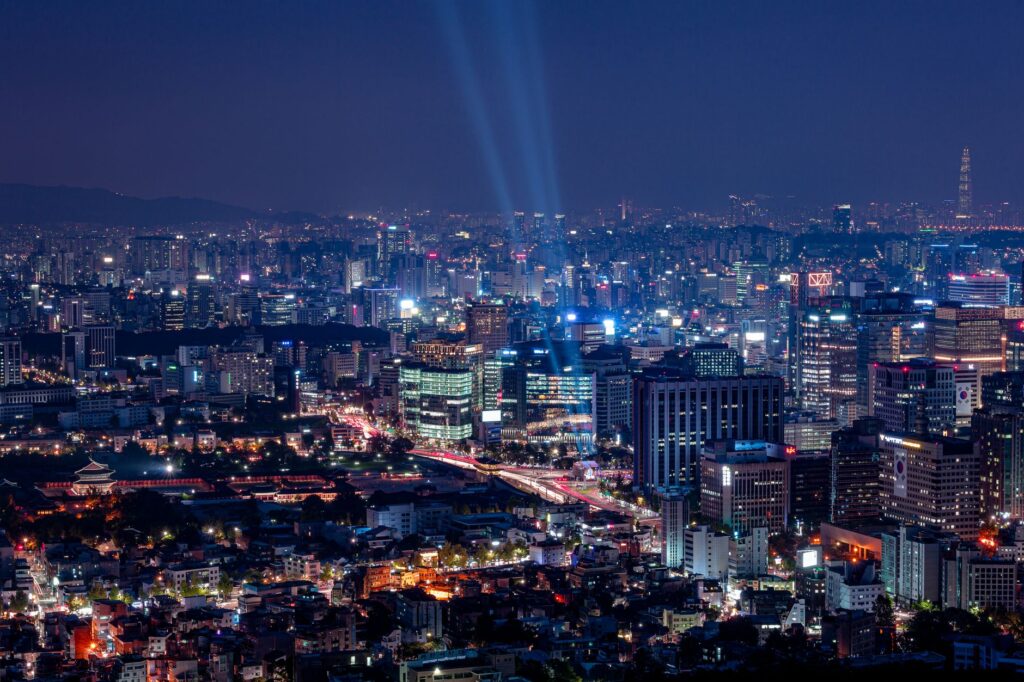
South Korea mixes palaces and street markets with neon nightlife, K-pop and some of the fastest internet on earth. A travel eSIM connects you before you land at Seoul Incheon (ICN): buy online, scan a QR code from your email, done. New to eSIMs? Start with what an eSIM is and how it works.
Why an eSIM beats roaming in South Korea
Roaming from home can mean punishing daily fees or per-megabyte billing. A local-network eSIM is one fixed price for a data bundle, paid up front — nothing to settle later. See eSIM vs roaming: what international data really costs.
Mobile networks & coverage in South Korea
South Korea is served by SK Telecom, KT and LG U+. Turnaa plans connect through partners and lock onto the strongest available signal automatically; the operator is shown in each plan’s details drawer. Coverage is exceptional nationwide — cities, subways, high-speed trains and mountains alike.
Best South Korea eSIM plans right now
Prices are live and shown up front — pick your data size (our how-much-data guide helps).
| Data | Data type | Duration | Price |
|---|---|---|---|
| 0.1 GB | Standard | 7 days | $2.99 |
| 0.5 GB | Standard | 7 days | $3.13 |
| 0.5 GB/day | Unlimited | 1 day | $3.13 |
| 1 GB | Standard | 7 days | $4.09 |
| 1 GB/day | Unlimited | 1 day | $4.41 |
How to install and activate
- Buy your plan — the QR code arrives by email within seconds.
- On Wi-Fi, open Settings → Cellular → Add eSIM and scan it. Guides for iPhone and Android, plus a quick check of which devices support eSIM.
- On landing, select the eSIM for data and enable data roaming for that line. Your home number stays live — keep your number and WhatsApp.
Where to go — and staying connected across South Korea
- Seoul — Gyeongbokgung Palace, Myeongdong shopping and Gangnam nightlife.
- Busan — beaches, seafood markets and temples by the sea.
- Jeju Island — volcanic craters, waterfalls and coastal trails.
- The DMZ — a fascinating day trip to the border.
Continuing across the region? See one eSIM for Asian travel.
What to eat in South Korea
Korean food is a highlight. Grill your own Korean BBQ, dig into bibimbap and kimchi, snack on tteokbokki and legendary fried chicken, and toast with soju.
Local customs, rules & sensitivities
- Use two hands when giving or receiving, especially with elders.
- Remove shoes indoors, and don’t stand chopsticks upright in rice.
- No tipping — it isn’t part of the culture.
- Age and seniority shape etiquette; let elders sit and eat first.
- A T-money card makes buses and subways tap-and-go.
South Korea data tips from the road
- Naver Map and KakaoMap work better than Google here and need data.
- KakaoTalk and translation apps run constantly — size your plan generously.
- Airport SIM counters charge tourist rates; an eSIM skips them.
FAQ
How much data do I need for a South Korea trip?
With heavy map and app use, 5–8 GB comfortably covers one-to-two weeks. See our data guide.
Is coverage really that good?
Yes — Korea has some of the world’s best mobile networks, including on subways and KTX bullet trains.
Do I keep my regular phone number?
Yes — the eSIM is a data-only line; your home SIM stays active for calls and texts, bank codes included.
What if it doesn’t work when I land?
Usually two settings: select the eSIM for data and enable data roaming (see troubleshooting). Support replies fast, and unactivated plans are refundable within 24 hours.