
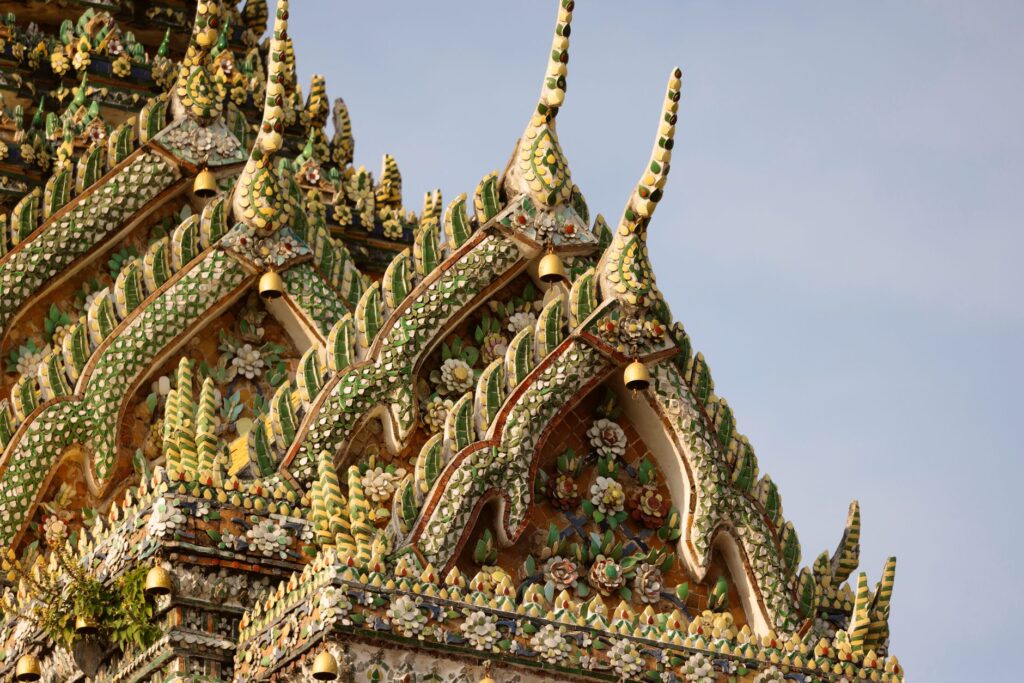
Thailand is the traveller’s favourite for a reason — Bangkok’s temples and street food, Chiang Mai’s misty hills, and islands like Phuket, Krabi and Koh Samui ringed by turquoise water. Between night markets, longtail-boat hops and last-minute bungalow bookings, data keeps everything moving. A travel eSIM connects you before you land at Bangkok (BKK/DMK), Phuket or Chiang Mai: buy online, scan a QR code from your email, done. New to eSIMs? Start with what an eSIM is and how it works.
Why an eSIM beats roaming in Thailand
Roaming from home can mean punishing daily fees; a local SIM means a counter queue. A travel eSIM is one fixed price for a data bundle, paid up front, working the second you arrive. Compare in eSIM vs roaming: what international data really costs.
Mobile networks & coverage in Thailand
Thailand is served by AIS, TrueMove H and dtac. Turnaa plans connect through partners and lock onto the strongest available signal automatically; the operator is shown in each plan’s details drawer. Coverage is strong in cities and across the main islands, thinning in remote jungle and on boat crossings.
Best Thailand eSIM plans right now
Prices are live and shown up front — pick your data size (our how-much-data guide helps).
| Data | Data type | Duration | Price |
|---|---|---|---|
| 0.1 GB | Standard | 7 days | $2.99 |
| 0.5 GB | Standard | 7 days | $3.13 |
| 0.5 GB/day | Unlimited | 1 day | $3.45 |
| 1 GB | Standard | 7 days | $4.09 |
| 1 GB/day | Unlimited | 1 day | $4.41 |
How to install and activate
- Buy your plan — the QR code arrives by email within seconds.
- On Wi-Fi, open Settings → Cellular → Add eSIM and scan it. Guides for iPhone and Android, plus a quick check of which devices support eSIM.
- On landing, select the eSIM for data and enable data roaming for that line. Your home number stays live — keep your number and WhatsApp.
Where to go — and staying connected across Thailand
- Bangkok — the Grand Palace, Wat Pho and Wat Arun, floating markets and street-food alleys; a ride-hailing app (Grab) is a lifesaver in the traffic.
- Chiang Mai & the north — temples, night bazaars, ethical elephant sanctuaries and cool mountain air.
- The islands — Phuket, Krabi’s limestone cliffs, Phi Phi, and Koh Samui and Koh Phangan in the Gulf.
- Ancient capitals — the ruins of Ayutthaya and Sukhothai, an easy trip from Bangkok.
Continuing across the region? See one eSIM for Asian travel.
What to eat in Thailand
Thai food is one of the world’s great cuisines, and the street is where it shines. Start with pad thai and a fragrant green or red curry, brave a proper tom yum, and cool down with mango sticky rice. Up north, don’t miss khao soi; everywhere, spicy som tam (papaya salad) and sweet Thai iced tea. Night markets are a feast for a few dollars — use your data to find the stalls with the longest local queues.
Local customs, rules & sensitivities
- Respect the monarchy. This is not optional — insulting the King or royal family is a serious crime (lèse-majesté) with real jail sentences. Never step on money or anything bearing the King’s image.
- Temple etiquette — cover shoulders and knees, remove your shoes, and never climb on Buddha images. Women should not touch monks or hand things directly to them.
- Heads and feet — the head is sacred (don’t touch anyone’s), and the feet are lowly: don’t point them at people or Buddha images, and don’t prop them on furniture.
- Keep your cool — losing your temper or shouting causes loss of face and gets you nowhere; a smile and calm go far. Greet with a wai (palms together).
- Everyday tips — tipping isn’t expected but is appreciated, bargain politely at markets, and be alert to common tuk-tuk and gem scams around big attractions.
Thailand data tips from the road
- Grab (ride-hailing and food) and offline maps run on data all day — size your plan generously.
- Airport SIM counters charge tourist rates and take your passport; an eSIM skips both.
- Download offline maps before island and jungle trips, where signal drops on boats and remote trails.
FAQ
How much data do I need for a Thailand trip?
Maps, Grab, messaging and social sit around 5–8 GB for a one-to-two-week trip; more if you stream or hotspot. See our data guide.
Does it work on the islands?
Yes — Phuket, Samui, Krabi and the main islands have solid coverage; expect the odd dead spot on boat crossings and remote beaches.
Is it good for Grab and maps all day?
Absolutely — that’s what a data plan is for here; just pick enough data, since navigation and ride-hailing run constantly.
Do I keep my regular phone number?
Yes — the eSIM is data-only; your home SIM stays active for calls and texts, bank codes included.
What if it doesn’t work when I land?
Usually two settings: select the eSIM for data and enable data roaming (see troubleshooting). Support replies fast, and unactivated plans are refundable within 24 hours.