
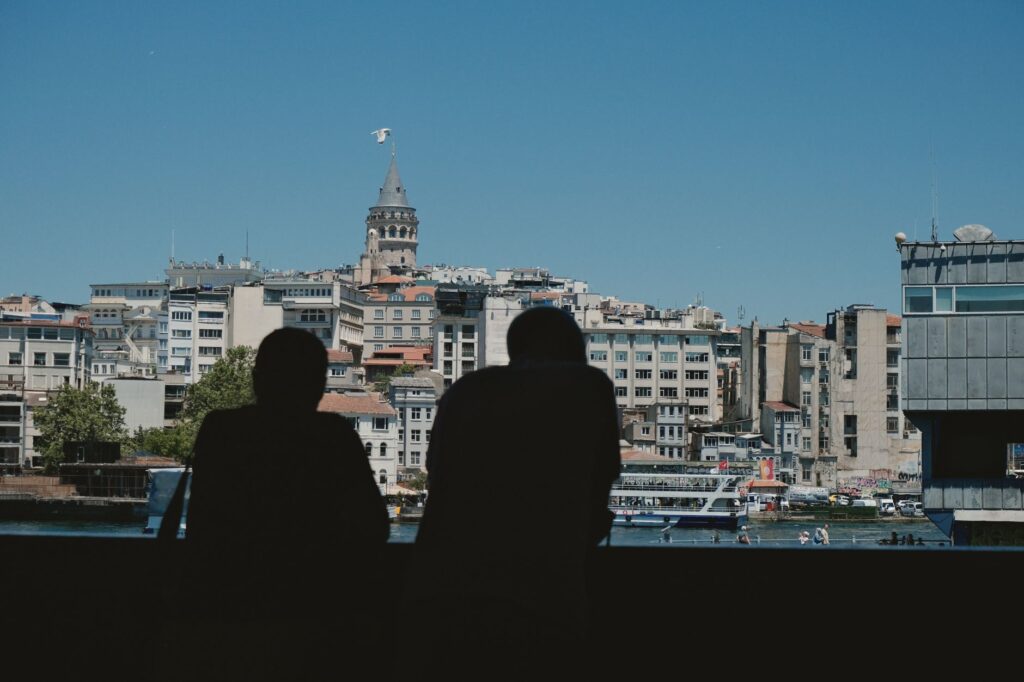
Between Istanbul’s two continents, Cappadocia’s balloon-filled dawns and the turquoise sweep of the Lycian coast, Turkey rewards travellers who stay connected — and quietly punishes anyone stuck hunting café Wi-Fi. Local SIM counters at Istanbul Airport still demand passport registration, a tourist mark-up and patience. A travel eSIM fixes all of that before you take off: buy online, scan a QR code from your email, and land with local-network data already live. New to the tech? Start with our plain-English guide to what an eSIM is and how it works.
Why an eSIM beats roaming in Turkey
Roaming with your home carrier means daily passes that stack up fast — or, worse, per-megabyte billing that can turn a single map lookup into a nasty bill. A local-network eSIM flips the model: one fixed price for a bundle of data, paid up front, with nothing to settle afterwards. We break the maths down in eSIM vs roaming: what international data really costs.
Mobile networks & coverage in Turkey
Turkey is served by three national operators — Turkcell, Vodafone TR and Türk Telekom. Turnaa plans connect through regional partners and lock onto the strongest available signal automatically; the exact operator for each plan is shown in its details drawer. Turkcell has the widest rural and coastal reach, so most travel eSIMs ride its network in remote Cappadocia, along the Lycian Way and up the Black Sea coast.
Best Turkey eSIM plans right now
Prices are shown live and up front — pick the data size that matches your trip (our how-much-data guide has real numbers for maps, messaging and streaming).
| Data | Data type | Duration | Price |
|---|---|---|---|
| 0.5 GB | Standard | 1 day | $2.99 |
| 0.5 GB | Standard | 7 days | $2.99 |
| 0.5 GB/day | Unlimited | 1 day | $2.99 |
| 1 GB/day | Unlimited | 1 day | $3.19 |
| 1 GB | Standard | 7 days | $3.32 |
How to install and activate
- Buy your plan — the QR code arrives by email within seconds.
- On Wi-Fi, open Settings → Cellular → Add eSIM and scan the code. Step-by-step for iPhone and Android, plus a quick check of which devices support eSIM.
- On landing, select the eSIM for mobile data and switch its data roaming on. Your home SIM stays active for calls and texts — here’s how to keep your number and WhatsApp.
Where to go — and staying connected across Turkey
Turkey is huge and varied; a data plan keeps maps, translation and ride-hailing apps (BiTaksi, Uber, Yandex) alive between regions.
- Istanbul — Hagia Sophia, the Blue Mosque, Topkapı Palace and the Grand Bazaar sit either side of the Bosphorus. Offline maps help here: the old town’s tangled lanes swallow GPS accuracy.
- Cappadocia — sunrise hot-air balloons over Göreme’s fairy chimneys, and cave hotels you’ll want to photograph and share on the spot.
- The turquoise coast — Antalya, Kaş, Ölüdeniz and the Lycian Way, where trail navigation and weather checks need reliable data.
- Ephesus & Pamukkale — the ancient city near Selçuk and the white travertine terraces of Pamukkale make an easy pair on the Aegean side.
Criss-crossing the country? Intercity buses and high-speed trains have patchy on-board Wi-Fi, so your own data keeps you online the whole way.
What to eat in Turkey
Turkish food alone is worth the trip. A leisurely kahvaltı (breakfast) spread of cheeses, olives, eggs, menemen and endless tea sets the tone; later, work through kebabs (döner, Adana, İskender), fresh meze, and street food like Istanbul’s balık ekmek (fish sandwich) and simit. Save room for baklava, künefe and Maraş dondurma ice cream, and drink like a local: çay all day, a small strong Türk kahvesi (Turkish coffee is UNESCO-listed), ayran with your kebab, and rakı with meze by the water. Gaziantep in the south-east is the country’s pistachio-baklava and kebab capital if you’re a serious eater. Quick tip: use your data to read reviews and translate menus on the spot — the best esnaf lokantası (tradesman’s canteen) rarely has an English sign.
Local customs, rules & sensitivities
Turks are famously hospitable, and a little respect goes a long way:
- Mosques — remove your shoes; women cover hair, shoulders and knees (scarves are usually provided); avoid visiting during the five daily prayers. Dress modestly at religious sites in general.
- Ramadan — during the holy month, be discreet about eating, drinking or smoking in public in conservative areas; iftar (the sunset meal) is a wonderful time to join in.
- Alcohol is legal and widely available, but heavily taxed and more discreet in conservative and eastern regions.
- Photography — never photograph military sites, police or airports, and ask before photographing people, especially women.
- Atatürk — the founder of modern Turkey is deeply revered; his image and the flag are taken very seriously, and disrespect is a genuine offence, both socially and legally.
- Everyday etiquette — remove your shoes when entering a home, tip around 5–10% in restaurants, bargain in the bazaars (but not in fixed-price shops), keep public affection modest outside the big cities, and stick to bottled water.
Turkey data tips from the road
- Istanbul Airport (IST) SIM kiosks charge steep tourist rates — with an eSIM you skip both the queue and the passport paperwork.
- Download offline maps for Istanbul and Cappadocia before you go; routing there is data-hungry and GPS is patchy in narrow streets and valleys.
- Turkcell’s network is your friend on the coast and in the countryside — it’s where most travel eSIMs get their best rural signal.
- Heading into Europe too? A single regional plan can cover a wider trip — see one eSIM for European travel, and our Greece eSIM guide if you’re island-hopping onward.
FAQ
How much data do I need for a week in Turkey?
For maps, messaging, social media and the odd video call, most travellers are comfortable on 3–5 GB a week. Heavy streaming or hotspotting a laptop pushes that higher — our data guide has real per-activity numbers, and you can hotspot from your eSIM too.
Does a Turkey eSIM work in Cappadocia and rural areas?
Yes — plans favour Turkcell, which has the broadest rural and coastal coverage, so you’ll stay online around Göreme, along the Lycian Way and on the Black Sea coast, with only the occasional deep-valley dead spot.
Does it work for a Bosphorus day trip to the Asian side?
Yes — Istanbul’s Asian districts use the same national networks, so your plan works identically on both continents, including on the ferries.
Do I keep my regular phone number?
Yes — the eSIM is a data-only second line. Your home SIM stays active for calls and SMS (bank codes included) while the eSIM carries your internet.
What if it doesn’t work when I land?
Ninety-five percent of issues are two settings: select the eSIM for mobile data and enable data roaming for that line (full troubleshooting guide). If it still fails, support replies fast — and unactivated plans are refundable within 24 hours.